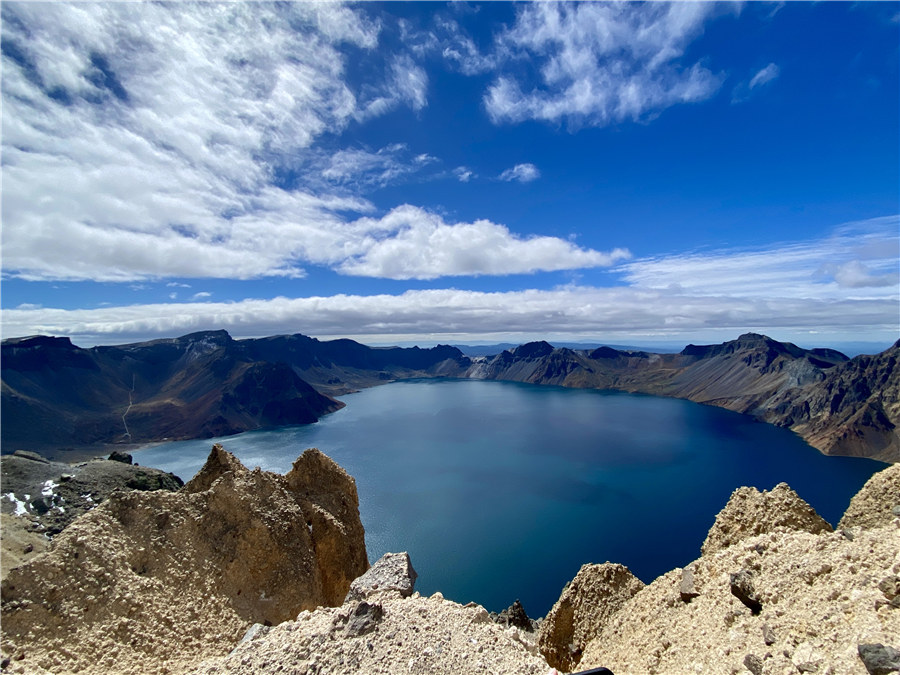
Changbai Mountain
Overview
Changbai Mountain, often referred to as the "Top of Northeast China," is located in Jilin province and serves as a major attraction for tourists due to its unique ecosystem, mountainous landscapes, and abundant ice and snow resources. Changbai Mountain is famed for its scenic vistas, notably the majestic Tianchi Lake, also known as Heavenly Lake, the largest crater lake in China. This natural wonder, coupled with the diverse flora and fauna, makes Changbai Mountain a vital ecological barrier in Northeast Asia and a cherished natural museum. The Changbai Mountain is part of the UNESCO Man and the Biosphere Programme (MAB), underscoring its global significance and ecological importance.
Terrain
The terrain of Changbai Mountain is characterized by rugged landscapes, including steep slopes, deep valleys, and high peaks, with the highest point being the summit where Tianchi Lake is located. The mountain system is significant for its geological formations, particularly its volcanic origins, which have shaped the breathtaking scenery that draws visitors from around the world.
Climate
The climate of Changbai Mountain varies with altitude but is generally classified as a temperate continental monsoon climate. This results in distinct seasons, with cold, snowy winters and mild, wet summers. The region experiences a long snow season, typically from mid-November to early April of the following year, making it a favored destination for winter sports enthusiasts. The climatic conditions contribute to the diverse ecosystems found within the mountain range, supporting a wide range of flora and fauna. As autumn comes, the forests of Changbai change into a colorful display. This makes them an attractive place to visit during autumn.
Flora and Fauna
The mountain's varied elevation zones create distinct ecological environments, ranging from broad-leaved forests to coniferous forests and tundra at higher altitudes. This biodiversity makes Changbai Mountain an important gene pool and a natural museum, attracting researchers and nature enthusiasts alike; Peony flowers are in full bloom in the peony park of Baoma Village at the foot of Changbai Mountain, Jilin province.
Historical Evolution
Changbai Mountain, once a volcano in ancient times, is rich in natural resources and has fostered the indigenous communities of Northeast China, contributing to the development of its unique culture. Human activities on Changbai Mountain can be traced back to primitive society, but its historical significance began during the Western Han Dynasty (206 BC-AD 24).
In 2005, the Jilin Provincial Party Committee established a management committee aimed at protecting the Changbai Mountain Nature Reserve. This initiative was designed to promote the tourism industry while ensuring unified planning, protection, development, and management of the region.
In 2006, the Provincial Forestry Department assigned the management of the Changbai Mountain Protection Bureau to the Changbai Mountain Protection Development Management Committee.
Tourism
The Changbai Mountain area is a paradise for outdoor enthusiasts, offering a wide range of activities and adventures throughout the year. In the summer, visitors can enjoy hiking, running, and biking through the pristine landscapes, while the winter months transform the mountain into a premier skiing destination. Other popular activities include paragliding, snowmobiling, and ice climbing, catering to thrill-seekers and sports enthusiasts.
The area is recognized as a training hub and hosts the Chinese Athletics Association's "Race Walking Training Base" and "Marathon Training Base". Since 2000, Changbai Mountain has organized multiple major outdoor sports events, including the National New Year's Climbing Conference, China's first University Outdoor Challenge, and the "Source-Seeking Outdoor Race". It also hosts a nationwide mountain marathon series and climbing competitions.
Sustainable Development
The Changbai Mountain Protection and Development Zone, established in 2005, covers 3,478.78 square kilometers in southeastern Jilin province. It focuses on preserving the mountain's rich biodiversity while promoting eco-tourism. The area is home to over 2,600 plant species and 2,400 animal species, including the Manchurian tiger, and more than 50 species are under national protection.
The Changbai Mountain Scenic Area, part of the zone, is a 5A-level national scenic spot and a UNESCO biosphere reserve. Known for its pristine environment, it boasts unique features like the Tianchi Lake, glaciers, and hot springs. The mountain’s diverse ecosystems and volcanic heritage make it one of the most well-preserved natural areas in the world. Article reference1. NE China's Changbai Mountain seeking to become top-level outdoor sports destination. chinadaily.com.cn. 20242. Autumn tourism flourishes at Changbai Mountain in Jilin. chinadaily.com.cn. 20233. Changbai Mountain is winter destination. chinadaily.com.cn. 2017Photo Gallery(9 pictures)CategoriesTourismTagNatural WonderResort TourismIce and Snow TourismRelatedDadong SiteChangbai Mountain Hot SpringsJilin Longwanqun National Forest ParkInkstoneCatalogue1. Overview2. Historical Evolution3. Tourism4. Sustainable Development- - - []








